
The Importance of Third-Party Inspection in Construction Safety and Quality
Volume 8, Issue 3, July-September 2025
The Importance of Third-Party Inspection in Construction Safety and Quality
Mr. Amogh CG
Senior Member – Institute of Safety Engineers (India)
Email id: amoghswamy9@gmail.com
Abstract
Safety and quality in construction work are inseparable. In the face of growing project size and complexity, TPI’s role has become more important than ever. Independent inspection helps in identifying risks early a confirmation that standards are followed, and supports project teams in the delivery of structures that are safe, reliable, and long-lasting. Third party inspection is not just about checking on compliance; it serves as further assurance of both safety and quality on site.
Keywords:
Safety management, Accident Prevention, Third-party inspection, Construction safety, Quality assurance, Risk management, Compliance monitoring, Project reliability, Construction standards, Compliance of Legal requirements
Objective:
To highlight how third-party inspections ensure adherence to safety standards and quality benchmarks in construction projects, minimizing risks, improving compliance, and enhancing overall project reliability.
1. Introduction:
There is an element of risk associated with every construction site. Pressing deadlines, often joined by numerous subcontractors, along with pressure to control costs, sometimes divert proper attention to safety and quality. Most projects have their internal inspection systems; these checks are not always thoroughly unbiased. Third-party inspections provide the added value here. A non-affiliated, qualified inspector provides reviews of materials, workmanship, and safety practices impartially. Such reviews enhance transparency, build up clients’ confidence, and-most importantly-help avoid accidents beforehand.
2. Third Party Inspection’s Role
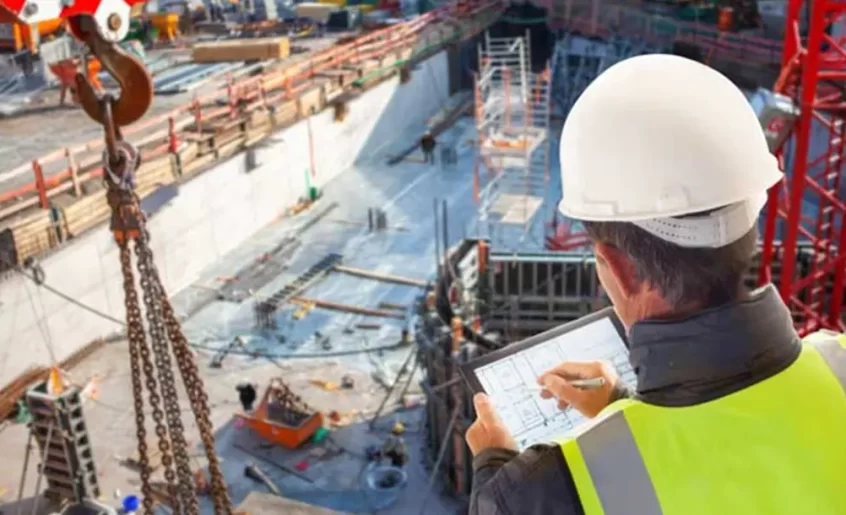
A third-party inspection agency works independently from both the contractor and the client. Its main responsibility is the confirmation that the construction activities are executed according to approved drawings, technical specifications, and safety regulations.
Typical responsibilities include:
- Review of construction drawings, specifications, and method statements.
- Verification of quality and suitability of materials prior to and during use
- Inspecting the key stages of reinforcement works, formwork installation, andconcreting.
- Verification of Lifting Equipment, Scaffolding System and related certification
- Recording of deviation and recommendation for the correction of action
- Preparation of stage-wise inspection reports and safety compliance records
3. Why Third-Party Inspection Is Important for Safety
A. Independent and Objective Control
Third-party inspectors have no link to project schedules or influences related to internal
management. Their findings are based purely on-site conditions and applicable standards.
This independence maintains honesty and accountability and instills trust in all parties to a
project.
B. Complying with Standards and Codes
Experienced inspectors ensure the construction activities abide by the relevant Indian Standards and safety requirements, to wit:
- IS 456 – Reinforced concrete works
- IS 800 – Steel construction
- IS 3696 – Safety for scaffolds and ladders
- IS 7293 – Crane operation safety • IS 3764 – Excavation safety practices
C. Prevention of Accidents
Most site accidents occur due to poor maintenance or missed inspections. Third-party
inspectors check that lifting equipment, formwork, and temporary structures are
appropriately certified and used correctly. This gives less chance of failures, near misses,
and serious incidents.
D. Improvement in Safety Culture
Safety awareness is improved as workers and supervisors alike know an independent
expert is monitoring site activities. This includes increased use of personal protective
equipment, following method statements, and putting safe work practices into place. Over
time, this leads to a more robust, honest safety culture on site.
4. Scope of Inspection
Project Stage Inspection Activities Pre-Construction Review of design documents, risk
assessments, and safety plans Material Stage Verification of steel, cement, aggregates, and
conformity certificates Execution Stage: stage-wise inspection of reinforcement, formwork,
concreting, and scaffolding Equipment Testing and certification of cranes, slings, chain
pulleys, and lifting tackles Handover Final safety audit and compliance certification.
5. Implementation Issues
Despite its advantages, third-party inspection still has certain drawbacks. Many contractors
fail to recognize the safety value that TPI brings in. It is also plagued by budget constraints,
especially for smaller and medium-sized projects. There is also a lack of inspectors who are
highly trained in both engineering and standards of safety. These need to be overcome by
regular training programmers, better enforcement from the client’s side, and recognition of
professional institutions like the Institute of Safety Engineers (India) which promotes
competent and qualified safety inspection practices.
6. Real-World Examples
Independent inspection personnel involved in one industrial foundation project pointed out
visible bending in lifting slings intended to lift a 30-tonne load. These slings were replaced
right away, even before the commencement of lifting operations. This timely act no doubt
evaded a serious accident and proved how early risk detection by third-party inspection
works.
At the same commercial project site in Bangalore, Karnataka, during a fabricated steel plate
lifting incident, an unexpected swinging of the load injured a nearby standing worker with
minor head and finger injuries. The root cause assessment indicated that there were
ineffective third-party supervision and poor maintenance of the exclusion zone. This was
followed by a comprehensive third-party inspection with a review for safety. Lifting
equipment, rigging procedures, and barricading were brought in line with approved safety
standards. This example clearly shows how independent inspection can prevent avoidable
incidents and strengthen on-site safety practices.
7. Conclusion
Third-party inspection is not merely a formality but one of the precautions for safety. By
combining technical expertise and independent oversight, it helps maintain quality
standards while protecting the interest of everyone working on site. To responsible
organizations, integrating third-party inspection at every phase of a project should be seen
not as an added cost but as investment in safety, reliability, and professional integrity. As
members of the Institute of Safety Engineers (India), it is our continuing duty to advocate
independent inspection as one of the vital components of a safer construction industry.
Copyright © 2025 Amogh CG. All rights reserved.
This article is an original technical contribution prepared by Amogh CG. Senior Member –
Institute of Safety Engineers India. Unauthorized reproduction or distribution in any form is prohibited without written permission from the author.